
百度翻译
能上楼梯、会避树枝 国内首款轮足导盲机器人杭州造_我的网站

一 | “Every role we take on simply expands the responsibility we already carry within.” The words felt inherent to the space…
Ashish Shelar is a prominent Indian politician, lawyer, and one of Mumbai’s most recognisable public leaders. A senior figure in the Bharatiya Janata Party, he has served multiple terms as an MLA from Bandra West and held key organisational roles, including President of the Mumbai BJP. Known for his sharp legal mind and grassroots connections, Shelar has played a significant role in shaping Mumbai’s civic and developmental policies, championing issues related to education, urban infrastructure, and youth empowerment.
He currently serves as the IT Minister and Cultural Minister of Maharashtra, roles in which he is driving digital growth, creative advancement, and cultural preservation across the state. Beyond politics, Shelar is deeply associated with sports and community initiatives. As former President of the Mumbai Cricket Association, he has supported major sports infrastructure and talent development. A Bandra boy at heart, Ashish Shelar remains an influential voice in Mumbai’s evolving public life. To understand Ashish Shelar is to recognise a figure shaped as much by Mumbai’s vibrant energy as by its quieter, inherited traditions. He is a man who has risen through the city’s layered terrain without severing himself from the places that first formed him. Years spent in a modest chawl did not merely define his beginnings; they created a lifelong grammar of community, discipline and instinctive empathy. His journey is not the familiar arc of a politician sculpted by circumstance, but that of a man who learned early that responsibility grows not from opportunity but from exposure to collective life. Those formative corridors shaped his sense of belonging long before public leadership entered his vocabulary.
Even today, beneath the roles he carries, there remains the unmistakable presence of someone who has listened closely to the city’s heartbeat. He understands its festivals and its silences, its ambition and its anxieties, its need for celebration, and its longing for continuity. In Shelar’s public persona, there is a rare blend of assertiveness and accessibility, a combination that allows him to move with equal ease through the institutional corridors of government and the lived reality of people’s everyday concerns. He stands as part of a generation of leaders who have witnessed Mumbai reinvent itself repeatedly, and he carries those transformations within him with a sense of responsibility that feels both personal and civic. The door opened with the quiet certitude of a room designed for conversation rather than display. Inside sat Ashish Shelar, composed and unhurried, carrying the ease of someone who has grown from the same soil as the city he serves. Nothing about the setting felt performative. It had the atmosphere of a familiar Mumbai afternoon where stories drift into the air long before they were spoken aloud. As Rachana Shah and Rhythm Wagholikar took their seats, the room softened into a steady rhythm. Shelar seemed intent on speaking not as a political figure but as a man shaped by the everyday pulse of the city that raised him. What followed was an interaction that moved with an unforced grace. It was a conversation that did not rush to conclusions but allowed insights to surface with their own natural cadence. Memories blended with reflections, personal anecdotes mingled with convictions, and the portrait of a leader quietly deepened. By the time the discussion drew to a close, it felt less like an interview and more like a window into the making of a man who continues to carry Mumbai within him. The interview was warm, engaging, and revealing in its own gentle way, unfolding with the ease of a story that simply needed the right moment to be told.
What follows are curated excerpts from a candid and wide-ranging interview with Ashish Shelar, conducted by Rachana Shah and Rhythm Wagholikar….
You grew up in a period that shaped Mumbai’s cultural and social identity. What part of that childhood shaped you?
My childhood in a Mumbai chawl was my first schooling. Life unfolded in proximity. You heard your neighbour’s joys and anxieties; you witnessed their efforts and celebrations. You grew into every festival, every household, every shared courtyard. That instinct for coexistence shaped me long before I understood the words for it. It taught me informality, empathy, and a rhythm of belonging that no structured education can offer.
Before public life found you, who were you as a young student or dreamer?
I was a struggler. There was no early ambition for leadership or public life. I worked hard for better education, for opportunities that seemed modest at the time but mattered immensely. Circumstances kept illusions at a distance. Looking back, I now understand that destiny or perhaps the guidance of my Sadguru had placed the path long before I recognised it.
Faith remains central to your life even with the pressures of public responsibility. What sustains that connection?
I like being with people. Service has always felt natural to me, whether in development work, healthcare assistance or simple presence. Temple visits are an extension of the same instinct. They keep me aligned with the inner rhythm I rely on.
Mumbai has reinvented itself many times. What is the soul of the city today?The soul of Mumbai lies in shared celebration. A society thrives when people come together. In my childhood, Navratri nights, Devikala Utsav, Vrinda Utsav and small school gatherings were part of our emotional landscape. I used to write the display boards for competitions. These details may appear small, but they created belonging. Keeping that spirit alive feels like an essential responsibility.
Was there a turning point that shaped your entry into public life?
When our chawl was demolished, we moved to Bandra. I was in class four. That move brought me to the RSS Shakha. I entered first to play but soon absorbed the discipline, the stories of Chhatrapati Shivaji Maharaj, the call of Vande Mataram and an early understanding of patriotism. Later came my years with ABVP as a full-time worker and then my journey through the BJP and Yuva Morcha. Each stage introduced its own discipline and widened my worldview.
Among the cultural responsibilities you have held, which initiative remains closest to your heart?
The UNESCO recognition of the twelve forts of Chhatrapati Shivaji Maharaj as a world heritage ensemble. Eleven forts in Maharashtra and one in Jinji, Tamil Nadu, were brought together under the understanding of the Maratha Military Landscape. For an entire cluster to receive recognition is rare. It has added significant value to our cultural and historical preservation, and this is one thing I hold closer to my heart.
If you could highlight a lesser-known cultural treasure of Maharashtra, what would come to mind?
There is no single answer,” he quietly smiled. “Our cultural depth stretches across languages, classical and semi-classical music, the energy of Lavani, the strength of theatre traditions, the devotion of the Varkari movement and the architecture of old temples and wells. Much of it has to be experienced rather than described.Politics can be emotionally demanding. How do you maintain balance?
Sadhana. My connection with my guru. The guidance of Sai Baba. Daily discipline keeps the mind centred and prevents unnecessary restlessness. If you could pass on three cultural values to the next generation, what would they be?
Humility, a mind free of ego and an alignment with nature. When you listen to your inner voice and stay close to nature, life aligns itself with you.
Do sports, cinema and literature influence the modern Maharashtrian mindset?
Human beings evolve through sensitivity. Films, music and theatre nurture emotional intelligence and expand imagination. They prepare individuals to be receptive and grounded.
When your journey is written someday, which chapter would you hope stands out?
I do not wish for any chapter to carry my name. Like for example, bringing back the historic sword of Chhatrapati Raghuji Raje Bhosale from London was meaningful, but it belongs to Maharashtra, not to any individual. Our life should be a dedication to humans and humanity.
From grassroots worker to cultural minister, what essence defined the transition?
Every stage widens your canvas. A ground worker thinks for the locality. A party worker thinks for the organisation. A representative thinks for the constituency. A minister thinks for the state. The thread that binds all stages is the ability to think for others.
As the conversation drew to a natural close, the room remained exactly as it had been at the beginning, quiet and steady, untouched by the weight of the words that had passed through it. He carried the city’s shifts within him. He understood its silences, its speed, its contradictions, and its spirit. For Rachana Shah and Rhythm Wagholikar, the interaction became a portrait of a man shaped by Mumbai and now shaping it in return, with a clarity that felt both measured and unmistakably sincere.
Also Read: Highlights From The 10th Filmfare Awards Marathi 2025。 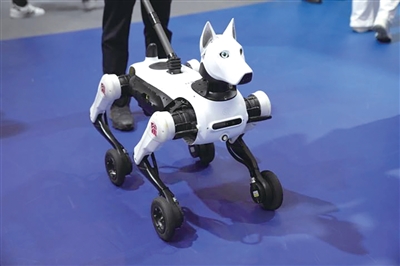 8月的北京亦庄,2026世界机器人大会展馆里热闹非凡,各式各样的机器人让人眼花缭乱,有叠衣服的、有陪聊天的、有巡检救援的。在中国兵器工业集团杭州智元研究院的展区,一个圆润白身的四足机器狗,成了展馆里的“人气担当”。

二 | 它叫“小远”,国内第一款面向视障人群的轮足式导盲机器人。“小远”的研发单位,是中国兵器工业集团杭州智元研究院旗下的“杭州远山智行科技有限公司”。这款导盲机器人不仅长了“轮子”,还长了“脚”,平地用轮子滑,走得快、声音小;遇到楼梯,自动切换成四足攀爬模式。导盲最怕什么?怕吵。

三 | 视障用户要靠耳朵听声辨位,机器要是嗡嗡响,反而添乱。“小远”的轮足构型,兼顾了安静与平稳,尽量不干扰用户自身的听觉判断。传统导盲设备很难感知悬在半空的东西,比如低垂的树枝、工地的脚手架。“小远”能精准识别悬空障碍,提前减速、绕行。室外定位误差控制在30厘米以内,室内避障成功率不低于99%,室外避障成功率不低于96%。大会开幕以来,“小远”一直是展区的“人气担当”。

四 | 许多观众停下来跟它互动,摸摸它的白色外壳,看它怎么绕过障碍物。工作人员介绍,有两位专程赶来体验的视障朋友,当“小远”带着他们稳稳穿过模拟的楼梯和障碍通道时,现场很多人都安静了。

五 | 对视障朋友来说,这意味着以后可以自己出门买菜、自己去医院、自己坐地铁了。“小远”不只是一个导航工具,它背后连着残联服务系统、无障碍地图更新平台,还有志愿者远程协助入口。目前,杭州智元研究院已与浙江省残联、内蒙古残联等多地残联达成战略合作,推动在地铁、商场等场景的试点落地。
Current article:http://6ayu2i.cuntoujuefourantapai.cfd/news/20260826_1623593.html
Published on:15:55:49
我的网站最新文章
- 乌前防长公开发难,要求泽连斯基给个说法
- 两头“灰犀牛”来袭,350000亿美元蒸发?
- Day of bloodshed in southwest Mexico kills at least 19 people, including police and officials
- 今年辽宁省粮食产量达500.06亿斤
- 觉华岛景区旅游市场规范整顿大会召开
- China launches first large-scale project to reuse retired wind turbines
- Chinese bank to help Turkish enterprises tap into business opportunities at the Canton Fair
- 合理膳食,保持健康体重
- 将于6月11日亮相/或售25万左右 小鹏G7更多官图发布
- FDA considers issuing proposed rule to ban formaldehyde in hair straightening products
- 张继科参加比赛,解说嘲讽“不如回家上综艺”,组委会公开道歉
- 如何突破舒适圈,这家公司有看点!| 1106 张博划重点
- そっち?トランプ関税違法判決巡り日本政府が懸念していること 後藤謙次氏「クレージーなんて訳されたら」
我的网站随机推荐
- 厄瓜多尔或被逐出世界杯
- 2026中国内地电影暑期档票房破百亿元人民币
- 国产抗日 FPS 游戏《抵抗者》2026 科隆游戏展最新实机演示公布
- China coastal regions relocate nearly 100,000 residents, suspend railway services and cancel flights as Typhoon Dolphin brings rainstorm and gales
- 名记:骑士在寻找替补大个 旧将乐福进入考察名单
- 赵发庆:队员们的身体状态很疲惫,我们做好了困难的准备
- 转型两年盈利迎来修复,安德玛好起来了?
- 我的天!又一西部球队被卖了!价值45亿!还不到湖人一倍!
- 目前尚无医务人员感染_患者_民航
- 投诉中网优能软件,不明收费扣钱,求退费用解绑定
- 千亿存储牛股营收狂飙近300% 半年赚了71亿元
- 毒油案火速起诉,绿营官员护航说谎全没事?黄国昌讽:只要脸皮厚!
- 初代《Mass Effect》毫无疑问是三部曲中剧情最出色的作品。