春妮的周末时光
福建“十五五”商务发展规划出台_我的网站

一 | AI摘要
福建印发“十五五”商务发展规划,提出到2030年巩固消费大省、贸易强省、引资大省、开放强省地位。
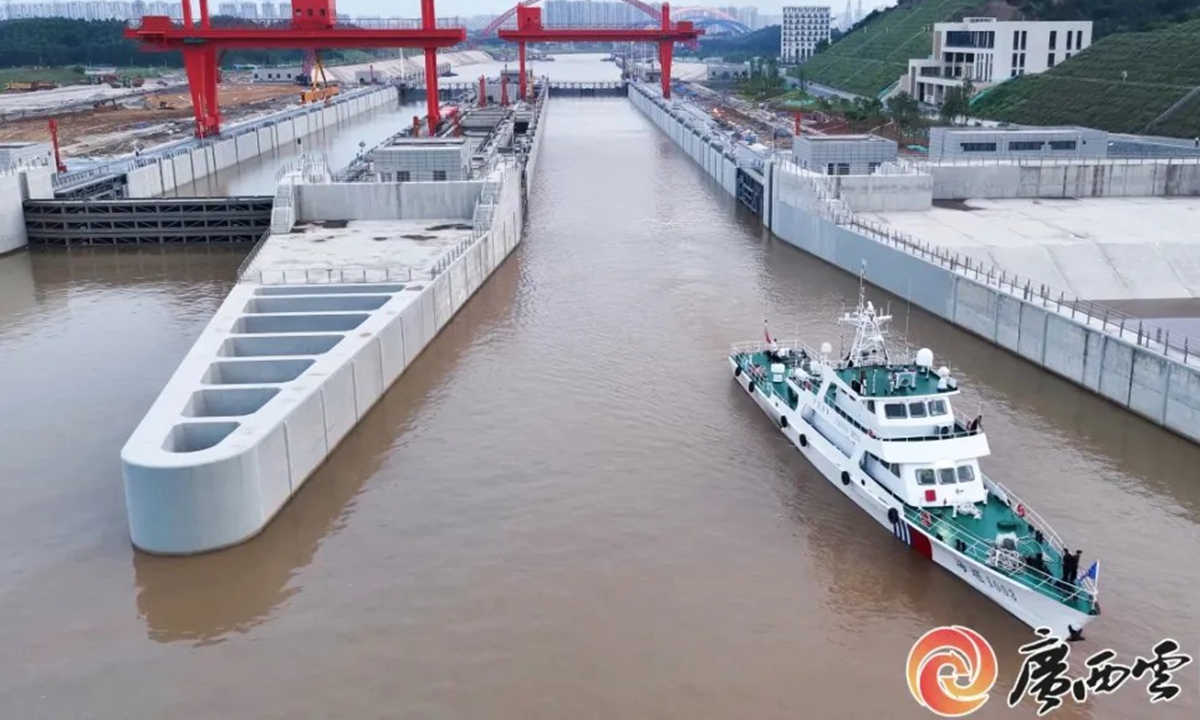
Haixun 1003 sails out of the Qingnian ship lock along the Pinglu Canal on August 7, 2026. Photo: Guangxi DailyChina has completed the first full-route patrol of the Pinglu Canal, a 134.2-kilometer waterway linking Nanning in South China's Guangxi Zhuang Autonomous Region with ASEAN members and other overseas markets, marking a key breakthrough in navigation tests using an actual vessel ahead of its scheduled opening in September, Guangxi Daily reported on Sunday.
The inspection was carried out from Friday to Saturday by the Guangxi Maritime Safety Administration using the patrol vessel Haixun 1003.
Starting from the canal's seaward entrance, the vessel traveled northward along the entire waterway, passing through the Qingnian, Qishi and Madao ship locks, which remain under construction, while inspecting construction vessels operating along the route. It arrived at the Pingtang River estuary on the afternoon of Saturday.
It was the first time a vessel had completed the entire 134.2-kilometer journey following completion of the canal's main works, representing a breakthrough in full-route navigation tests using an actual vessel, according to Guangxi Daily.
The Haixun 1003 is the first offshore patrol vessel deployed by China's Ministry of Transport at Qinzhou Port. The vessel is 46.1 meters long and 6.8 meters wide, with a maximum speed of 25.3 knots and a cruising range of 500 nautical miles. It can withstand winds of up to Force 9 on the Beaufort scale, roughly 76-87 km/h usually with waves 6-9 meters.
The vessel is also equipped with an advanced marine electro-optical tracking and evidence-collection system capable of operating in color, monochrome, infrared and laser modes under different weather and lighting conditions. The system supports integrated data collection and transmission, Guangxi Daily reported.
During the patrol, maritime authorities conducted on-site inspections of key navigation conditions, including channel dimensions, curved sections of the waterway, navigational clearance beneath bridges, ship-lock approach channels and the mouths of tributaries.
The patrol was also designed to test the practicality of provisions contained in the Regulations on Navigation Safety Management of the Pinglu Canal, which are expected to take effect when the canal opens in September.
The results will provide a basis for refining vessel navigation rules and improving measures intended to safeguard traffic along the canal, according to the report.
Lü Jin, deputy director of the Qinzhou Maritime Safety Administration, said the inspection aims to assess the canal's navigational environment, verify whether navigational aids had been positioned appropriately, identify safety risks along the route and locate waters that could be used during emergencies.
The findings will also support the formulation of on-site supervision plans and help ensure that the canal opens safely and in an orderly manner on schedule, Lü said, according to Guangxi Daily.
The Pinglu Canal is a key project of the New International Land-Sea Trade Corridor. With total investment exceeding 70 billion yuan ($10.37 billion), the canal begins at the Pingtang River estuary in Hengzhou, administered by Nanning, follows the Qinjiang River into the Beibu Gulf, according to Xinhua News Agency.
It is China's first major river-to-sea canal project planned and coordinated at the national level since 1949 and is designed to accommodate vessels of up to 5,000 tons.
Once operational, the canal will give inland regions in Southwest China a more direct river route to the sea. Cargo that previously had to travel eastward through the Guangzhou port will be able to head south directly toward ports in the Beibu Gulf, shortening some inland waterway journeys by about 560 kilometers, according to Xinhua.
The New International Land-Sea Trade Corridor is an international trade and logistics network connecting China's western regions to ASEAN countries and other overseas markets.
It links the Silk Road Economic Belt in the north with the 21st Century Maritime Silk Road in the south while coordinating with the Yangtze River Economic Belt. China's National Development and Reform Commission released an overall plan for the corridor in 2019.
The corridor has continued to record strong trade growth. During the first half of 2026, imports and exports transported through the corridor by its participating regions reached 517.23 billion yuan, up 13 percent year-on-year and setting a new record for the same period, per data released by Chongqing municipal government.
The successful full-route patrol represents a crucial step in maritime authorities' preparations for the opening, providing data from actual vessel operations needed to improve navigation management, emergency planning and safety arrangements ahead of commercial operations, Guangxi Daily reported.
Global Times
。

二 | 规划明确社零总额破3万亿等目标,并部署提振消费、优化贸易结构、深化对外开放等具体举措。
日前,福建省人民政府印发《福建省“十五五”商务发展规划》,提出推动数智赋能商务发展,加快培育商务领域新质生产力,推动消费大省、贸易强省、引资大省、开放强省建设再上台阶。 《规划》提出,到2030年,消费大省地位巩固,社会消费品零售总额争取突破3万亿元,服务消费占比稳步提升;贸易强省格局成形,货物贸易、服务贸易、数字贸易协同发展,货物进出口总额占全国份额基本稳定,服务进出口总额达260亿美元;引资大省优势凸显,招商统筹机制更加完善,实际使用外资五年累计达1200亿元;开放强省建设提速,自贸试验区提升战略深入实施,对外投资合作跃上新台阶,实际对外投资额占全国份额基本稳定,闽台经贸融合取得新成效,闽港澳侨合作持续深化,开发区建设创新提质,现代口岸枢纽经济加速构建。

三 | 围绕消费大省、贸易强省、引资大省、开放强省建设,《规划》提出具体举措,包括:实施提振消费专项行动、国际化消费环境建设行动等;实施产业结构优化升级工程、开展内外贸一体化优质企业培育行动等;打造“投资中国”标志性展会、构建“投资福建”品牌矩阵等;全面深入实施自贸试验区提升战略、提升对外投资和经济合作水平、推动闽台港澳经贸合作、推动开发区创新提质、打造现代口岸枢纽经济等。

四 | (记者 曾庆贤)。
Current article:http://6ayu2i.cuntoujuefourantapai.cfd/news/20260826_3599202.html
Published on:20:28:51